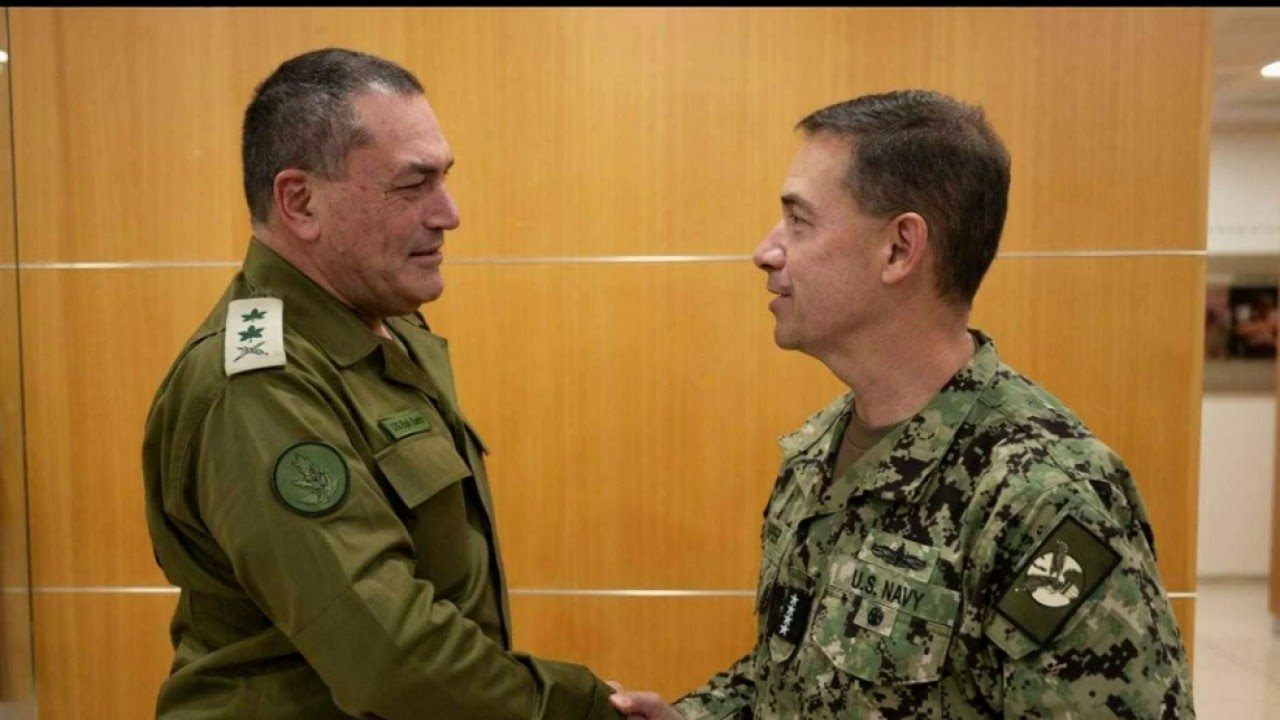
US-Israel Strikes on Iran: Analyzing Escalation & Tehran's Response
The geopolitical landscape of the Middle East has once again been rattled by a series of significant military operations. In a move that dramatically escalated regional tensions, the United States and Israel recently launched what were described as "major combat operations" against Iran. These coordinated strikes, announced by then-US President Donald Trump, targeted dozens of military objectives within Iran, with the stated aim of eliminating "imminent threats" emanating from the Iranian regime. This aggressive posture has immediately raised the specter of widespread retaliation from Tehran, prompting a critical analysis of Iran's military capabilities and the potential pathways for a dangerous regional conflagration.
The international community watches with bated breath, as the declared intent to "destroy their missiles and raze their missile industry" from the US president underscores the gravity of the situation. Such actions naturally invite an urgent examination of Iran's capacity to respond and the long-term implications for stability in an already volatile region.
The Catalyst: US-Israel Strikes and Their Strategic Aims
The recent coordinated strikes by the US and Israel marked a significant escalation in the ongoing tensions with Iran. Announced by then-President Donald Trump on social media, these "major combat operations" were ostensibly launched to counter "imminent threats" from the Iranian regime, with Israel's military confirming targets across "dozens of military objectives." The rhetoric accompanying these strikes was unyielding, with President Trump explicitly stating an intent to "destroy their missiles and raze their missile industry." This aggressive stance was echoed by Israeli officials, who reportedly indicated that thousands of targets in Iran would be struck in the ensuing days.
The immediate aim appears to have been a swift and decisive degradation of Iran's military infrastructure, particularly its perceived missile capabilities. However, the broader strategic objectives extend beyond immediate disarmament, likely aiming to deter future actions, weaken the regime's military leverage, and potentially force a recalculation of its regional policies. Such a robust display of force carries inherent risks, chief among them the strong possibility of provoking a significant and unpredictable Iranian response, thereby pushing the region closer to open conflict. The scale and coordination of these strikes underscore a unified resolve from Washington and Jerusalem, but they also ignite concerns about the pathways to rapid escalation, where tit-for-tat actions could quickly spiral out of control.
Tehran's Formidable Conventional Arsenal: A Dual Military Structure
In the face of such aggressive actions, the question of Iran's military response capabilities becomes paramount. Over recent years, Iran has considerably strengthened its military prowess, relying on a unique and formidable dual-pronged structure: the Artesh (the regular state army) and the Islamic Revolutionary Guard Corps (IRGC), often referred to as the "Pasdarans."
The **Artesh**, comprising the ground, air, naval forces, and air defense, is the traditional military responsible primarily for national defense, border protection, and maintaining the nation's territorial integrity. It boasts an active force of approximately 415,000 personnel, supported by an additional 350,000 reservists. While conventionally structured, the Artesh has also benefited from significant indigenous advancements in military technology, particularly in air defense systems and naval assets tailored for asymmetrical warfare in the Persian Gulf.
Complementing and often overshadowing the Artesh are the **Revolutionary Guards (Pasdarans)**. This ideologically driven force, with an estimated 300,000 active members, is far more than just a parallel army; it is deeply interwoven with the Iranian political and economic fabric. The IRGC fields its own ground, air, and naval units, including elite paratroopers. Its most renowned and strategically impactful component is the **Quds Force (Forces al-Qods)**, an elite special operations unit responsible for unconventional warfare and intelligence operations outside Iran's borders. The Quds Force acts as Tehran's primary instrument for projecting power and influence across the Middle East, supporting allied militias and proxy groups from Lebanon to Yemen. This capability for non-conventional intervention means that an Iranian response to direct strikes might not be confined to its borders, but could involve regional proxies, complicating the conflict significantly.
Overall, Iran commands approximately 715,000 soldiers, making its armed forces the seventh largest globally. This significant manpower, combined with its distinct operational doctrines, ensures that any military engagement with Iran would be a complex and protracted affair. For a deeper understanding of Iran's diverse military assets, including its missile capabilities and strategic forces, explore our detailed article:
Iran's Military Arsenal: Missiles, Forces & Nuclear Potential.
The Nuclear Question: Iran's Ambiguous Deterrent and "Frappes Nucléaires Iran" Concerns
Perhaps the most unsettling dimension of any conflict involving Iran is the lingering question of its nuclear program. While the recent US-Israel strikes were explicitly conventional, the shadow of potential nuclear escalation invariably looms over discussions of such a volatile geopolitical flashpoint, driving the international preoccupation with any potential "frappes nucléaires iran" scenario. The reference context clearly states that Iran possesses a "potential nuclear deterrent force whose advancement remains unclear." This ambiguity is a source of profound regional and global concern.
Iran has consistently maintained that its nuclear program is for peaceful energy purposes. However, the opacity surrounding its activities, coupled with its enrichment capabilities and refusal of unfettered international inspections, has fueled persistent suspicions about its true intentions. In a situation of heightened military tension, the *possibility* of Iran either developing nuclear weapons or the conflict escalating to a point where nuclear capabilities become a factor, even if unconfirmed, creates a dangerous dynamic. The keyword "frappes nucléaires iran" encapsulates these anxieties – not necessarily implying that nuclear strikes have occurred or that Iran possesses operational nuclear weapons, but rather addressing the grave concerns about the *nuclear dimension* of the conflict, the *potential* for such escalation, and the international community's efforts to prevent it.
The strategic uncertainty surrounding Iran's nuclear status acts as a powerful, albeit undeclared, deterrent. It complicates military planning for its adversaries and ensures that any direct confrontation carries an existential risk. While the provided context doesn't confirm Iran's possession of nuclear weapons or that the recent strikes were nuclear, the very discussion around "frappes nucléaires iran" highlights the global anxiety that military action could trigger a rapid advancement in Iran's nuclear program or lead to a desperate, last-resort response involving capabilities whose development remains shrouded in secrecy. This complex interplay of conventional military strength and nuclear ambiguity is central to understanding Tehran's defense posture and the broader risks of regional conflict. For more insights into Iran's elite forces, ballistic missile program, and the mystery surrounding its nuclear ambitions, read our article:
Tehran's Defense: Elite Forces, Ballistic Missiles & Nuclear Mystery.
Analyzing Escalation Pathways and Regional Repercussions
The US-Israel strikes open multiple pathways for escalation, each with dire regional and global consequences. Iran's initial response could range from targeted missile retaliations against US or Israeli assets in the region – a capability underlined by its diverse arsenal of ballistic missiles with ranges of 300 to 3,000 kilometers – to activating its network of proxy forces. The Quds Force, with its long history of unconventional operations, could orchestrate attacks via groups in Iraq, Syria, Lebanon, or Yemen, transforming the direct conflict into a wider regional proxy war. This "specter of regional conflagration" is a primary concern for international observers, as a spreading conflict could destabilize key shipping lanes, disrupt global energy supplies, and create new refugee crises.
Adding to the volatility, the reporting by Israeli media regarding the alleged death of Supreme Leader Ali Khamenei, even if unconfirmed and potentially a form of psychological warfare, highlights the fever pitch of information warfare and propaganda that accompanies such conflicts. The death or severe incapacitation of a supreme leader during a period of intense military pressure could either galvanize nationalistic fervor or create a power vacuum, both leading to unpredictable outcomes. Netanyahu’s threats of "thousands of targets" being struck in the coming days suggest a sustained campaign rather than a one-off punitive measure, further increasing the likelihood of Iran exhausting its restraint and launching significant retaliatory actions. The region is poised on a knife-edge, where every military move, every political statement, and every unsubstantiated report can trigger a chain reaction with far-reaching consequences.
Conclusion: A Precarious Balance on the Brink
The recent US-Israel strikes on Iran represent a dangerous intensification of long-standing hostilities, plunging the Middle East into an even more precarious state. While the immediate focus is on conventional military engagements and Iran's formidable arsenal of ballistic missiles and dual military structure, the underlying concern about its potential nuclear capabilities cannot be overlooked. The ambiguity surrounding Iran's nuclear program, particularly in the context of discussions around "frappes nucléaires iran," continues to cast a long shadow, elevating the stakes far beyond a conventional conflict. The deliberate targeting of Iran's military infrastructure, coupled with strong rhetoric from both sides, creates an environment ripe for miscalculation and rapid escalation. As the region braces for potential Iranian retaliation, the international community faces the critical challenge of preventing a localized conflict from spiraling into a broader regional war, one where the complex interplay of conventional might, proxy warfare, and nuclear uncertainty could lead to catastrophic outcomes. The delicate balance between deterrence and provocation remains the defining feature of this perilous situation.